Bemical Sewage Treatment Plants: Nature’s Way, Accelerated
The Gold Standard in Decentralised Wastewater Recycling
Bemical Sewage Plants are engineered to transform raw sewage (both black and grey water) into high-quality effluent suitable for irrigation. With the product's original architect now part of the Bemical team, we bring over 20 years of experience in the sewage recycling industry and a footprint across 11 African countries to your project.
How the Bemical Biological Process Works
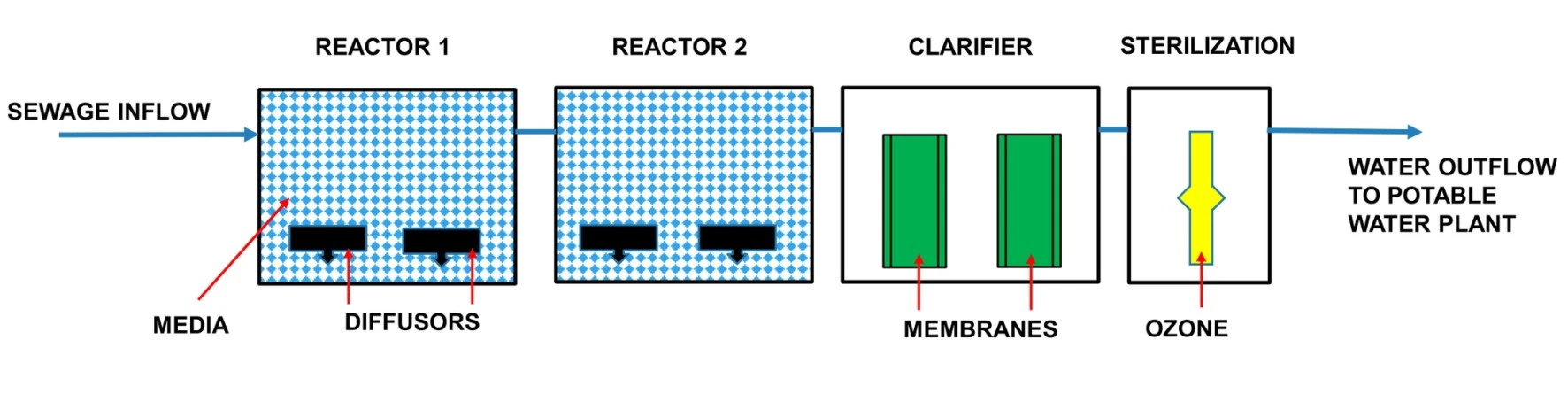
Unlike traditional septic tanks that merely store waste, a Bemical plant is a living ecosystem. The process follows a precise four-stage flow:
- Collection & Primary Settlement: All raw sewage is collected in a primary septic tank where fats, oils, and organic solids are separated.
- Biological Reactor (Moving Bed Bio-Reactors): Submersible pumps move the effluent at a controlled rate into the heart of the plant. Here, specialised media provides a massive surface area for our high-potency bacteria to colonise and digest organic matter.
- Clarification: The treated water enters a clarification zone where any remaining fine solids settle out, leaving clear water.
- Sterilisation: The final stage utilises Ozone or Chlorine sterilisation to eliminate pathogens, ensuring the outflow is safe for reuse.
Technical Performance Specifications
The efficiency of the Bemical system is verified by its ability to reduce contaminants to levels far below municipal requirements.
| Parameter | Before Treatment (Influent) | After Bemical Treatment | Max Allowed Limit |
|---|---|---|---|
| Suspended Solids (SS) | 1948 mg/L | 1.0 mg/L | 25 mg/L |
| Chemical Oxygen Demand (COD) | 1774 mg/L | 54 mg/L | 75 mg/L |
| Ammonia (as N) | 72 mg/L | 0.4 mg/L | 15 mg/L |
Key Benefits for Property Owners & Developers
- Irrigation Ready: Convert your waste into a resource. The final effluent is ideal for gardens, dust suppression, or agricultural use.
- Small Footprint: Our modular design allows for high-capacity treatment in a fraction of the space required by traditional leach fields.
- Odourless & Silent: The advanced aeration and biological digestion process eliminate the foul gases typically associated with sewage.
- Modular & Scalable: Systems can be expanded easily to accommodate anything from a single residential home to large industrial camps.
Available Configurations
- Below Ground: For a discreet, "invisible" installation.
- Small Footprint: Ideal for rocky terrain where excavation is difficult.
- Above Ground: The advanced aeration and biological digestion process eliminate the foul gases typically associated with sewage.
- Containerised: Modular "Plug & Play" units for rapid deployment in remote mining camps or rural infrastructure projects.
The Science of Sewage Breakdown: Nitrification & Denitrification
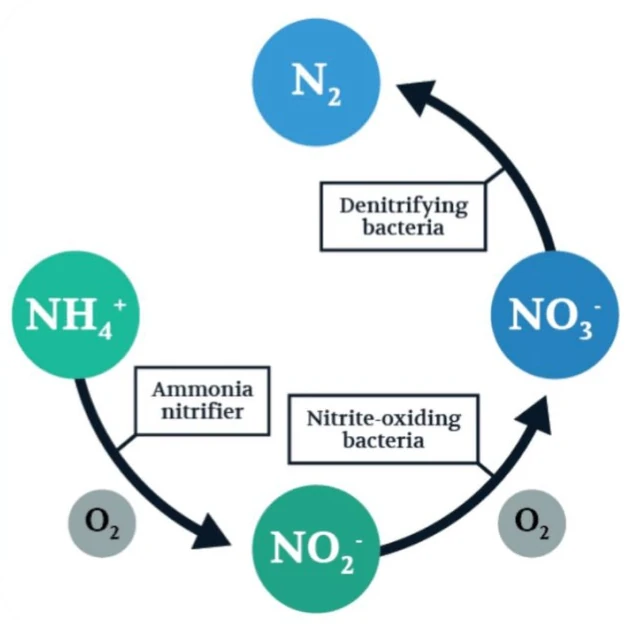
Effective wastewater treatment relies on a two-stage biological process to remove nitrogenous pollutants, which are primary drivers of environmental contamination.
Stage 1: Nitrification (Aerobic Process)
Ammonia (NH3) is a nitrogenous compound that must be removed or significantly reduced to protect aquatic ecosystems. This occurs through nitrification, an aerobic process where specialised nitrifying bacteria carry out a two-step chemical conversion:
- Ammonia and other nitrogen compounds are first converted into Nitrite (NO2).
- Nitrite is then further oxidised into Nitrate (NO3).
Because nitrification requires molecular oxygen (O2) to achieve these conversions, this stage is performed in highly aerated environments.
Stage 2: Denitrification (Anoxic Process)
Once nitrification is complete, denitrification must occur to remove the nitrate from the wastewater. Unlike the previous stage, this is an anaerobic process that takes place in an anoxic state (an environment absent of free oxygen).
During this phase, denitrifying bacteria reduce the nitrate into molecular nitrogen (N2) gas. The mixture of denitrified activated sludge and raw wastewater is then aerated, allowing the harmless nitrogen gas to be released into the atmosphere.
Advanced Nutrient Removal: The Bemical Approach
Our sewage plants don’t just move waste; they transform it. Through a scientifically balanced cycle of Nitrification and Denitrification, we use specialised bacteria to convert harmful ammonia into harmless nitrogen gas. This two-stage biological process ensures your effluent meets the strictest environmental standards for irrigation and discharge.
Mobile Water Purification & Sterilisation System
Your First Line of Defence in Environmental Protection
Safe Drinking Water, Anywhere on Earth
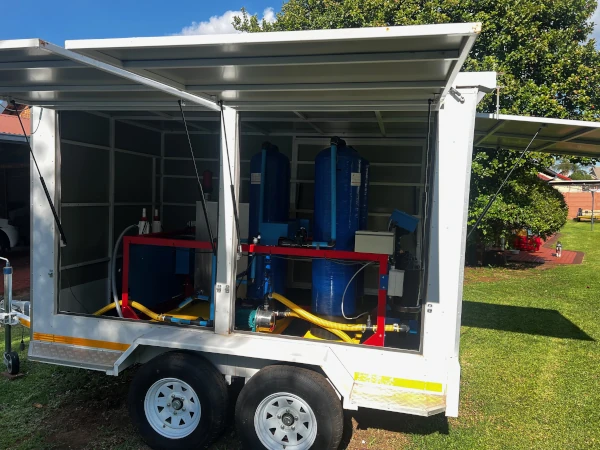
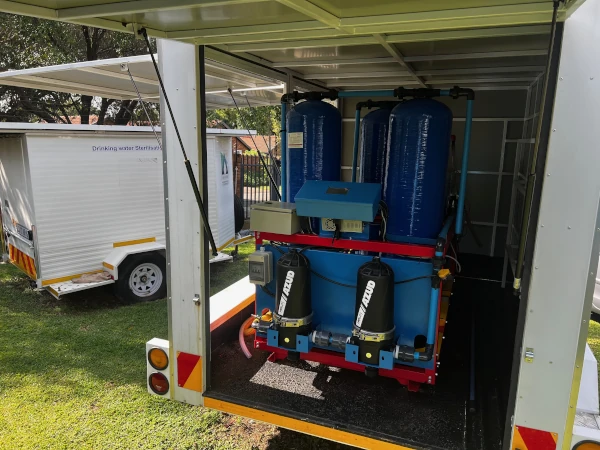
Bemical’s mobile purification system is a patented, world-class solution designed to provide clean, healthy drinking water in remote areas, disaster zones, or off-grid communities. Developed over eight years of intensive R&D, this system destroys bacteria, viruses, and hydro-toxins without the use of harmful chemicals.
The Technology: Chemical-Free Sterilisation
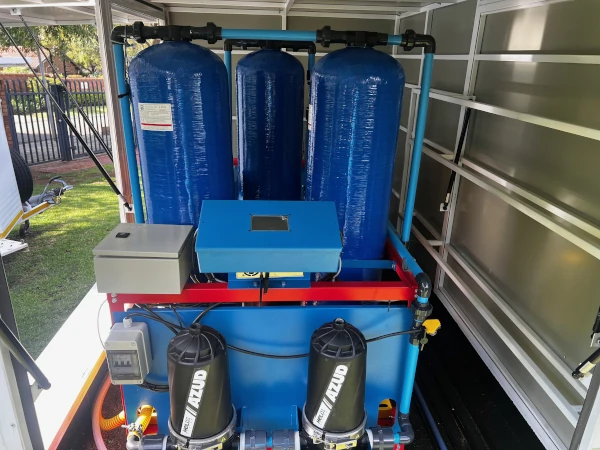
Unlike traditional systems that rely on chlorine or reverse osmosis, our unit combines a patented steriliser with specialised filter media.
- Pathogen Destruction: Effectively eliminates bacteria and viruses through a non-chemical sterilisation process.
- Metal Removal: Integrated filter media removes toxic metals from the water supply.
- Fine Filtration: The standard system filters down to 2 microns, with an optional upgrade available for 1-micron absolute filtration.
- Automated Maintenance: The unit features an automated backwash system, ensuring the filters remain clean with minimal manual intervention.
Technical Specifications & Performance
Designed for high-impact deployment with low operational requirements.
Feature | Capability |
|---|---|
Flow Rate | Average 1,000 litres per hour[cite: 8]. |
Community Impact | Supplies clean water for 2,000 – 2,200 people per day[cite: 9]. |
Power Source | Solar-powered with petrol generator support; fully infrastructure-independent[cite: 10]. |
Deployment Options | Available as a mobile trailer, static skid, or secure shipping container[cite: 4, 5]. |
Consumables | Operates without daily consumables; media replacement required only once per year[cite: 6, 11]. |
Awards & Recognition
This technology has been internationally recognised for its social and technical innovation, featuring as a finalist in:
- PWC “Vision to Reality” Awards
- SAB Foundation’s Social Innovation Awards
- Agri-Water Innovation Challenge
Ideal Applications
- Disaster Management: Can be air-deployed for immediate response in crisis zones.
- Rural Infrastructure: Providing sustainable water solutions for schools and clinics without access to the grid.
- Remote Work-sites: Reliable water for mining camps or agricultural projects.
Technical Comparison: Bemical vs. Traditional Reverse Osmosis (RO)
While Reverse Osmosis is a well-known water treatment method, it often presents significant challenges in remote or off-grid environments due to high maintenance needs, chemical reliance, and water waste. Bemical’s patented sterilisation technology offers a more sustainable and cost-effective alternative.
Efficiency & Operational Comparison
Feature | Bemical Mobile System | Traditional Reverse Osmosis (RO) |
|---|---|---|
Sterilisation Method | Patented chemical-free steriliser destroys bacteria and viruses. | Often requires pre-treatment chemicals or high-pressure membranes. |
Water Recovery | High efficiency with minimal waste; utilises automated backwash. | Significant "brine" waste (often losing 50% or more of source water). |
Consumables | None for daily operation. Media replaced only once per year. | Requires regular replacement of expensive membranes and filters. |
Maintenance Skill | Low; no specialised training or skills required for operation. | High; requires technical expertise to manage pressures and chemistry. |
Infrastructure Need | Fully independent; solar-powered with backup generator. | Requires high-voltage power to drive high-pressure pumps. |
The Bottom Line: Total Cost of Ownership
- Maintenance Savings: Traditional systems can accrue heavy costs through membrane fouling and chemical dosing. Bemical’s only major maintenance is a once-yearly replacement of the sand, carbon, and metal removal media, typically costing less than USD 1,000.
- Environmental Footprint: Because our system does not use chemicals to destroy hydro-toxins, the discharge from the automated backwash does not contaminate the local environment, unlike the concentrated brine produced by RO units.
- Durability: Designed for mobility in rugged areas, the system can be deployed on trailers, skids, or in secure shipping containers to prevent theft and vandalism.
Ready to Deploy?
Whether for disaster management, rural community support, or remote mining camps, the Bemical Mobile Water Purification System provides immediate, sustainable results where traditional infrastructure fails.
Spill Kits & Absorbents
Your First Line of Defence in Environmental Protection
A spill doesn’t have to become a legacy of contamination. Bemical’s spill management solutions are designed for rapid response, ensuring that industrial leaks—from oils and fuels to hazardous chemicals—are contained and managed using 100% natural and sustainable materials.
The Power of Natural Absorbency
Unlike traditional synthetic pads that end up as permanent waste, our spill kits utilize organic, biodegradable absorbent materials. This approach not only provides superior wicking action but also aligns your facility with global sustainability standards.
- Rapid Capture: High-performance natural fibres that pull contaminants away from surfaces instantly.
- Eco-Friendly: Made from renewable resources that minimize your operational carbon footprint.
- Zero Waste to Landfill: Integrated with our bioremediation agents, captured waste can often be treated on-site rather than dumped.
- Versatile Response: Tailored kits for hydrocarbons, general chemicals, or marine environments.
Spill Kit Range & Specifications
Choose the right kit based on your specific risk profile and waste management goals.
Kit Type | Application & Absorbent Base |
|---|---|
Hydrocarbon Kit | Specifically for oils, fuels, and grease. Hydrophobic material that repels water while absorbing only the contaminant. |
Chemical Spill Kit | Universal natural absorbents treated to handle aggressive acids and hazardous liquid chemicals safely. |
Marine Spill Kit | Floating booms and mats designed for open water or harbour containment of petroleum products. |
General Maintenance | Economic, all-purpose natural pads for workshop leaks and day-to-day industrial cleaning. |
A Complete Solution
For maximum efficacy, our spill kits can be paired with Green Lock Hydrocarbon Converter. By applying Green Lock directly to the spill area, hydrocarbons are encapsulated and rendered inert, ensuring that runoff is non-toxic and the environment is protected from the moment the spill occurs.
Spill Response Protocol: Rapid, Natural Restoration
When a spill occurs, every second counts. Bemical provides a three-stage protocol that integrates our high-performance absorbent kits with our proprietary biological converters to ensure that accidents are contained, neutralized, and restored without leaving a toxic footprint.
Containment (Stop the Spread)
Immediately deploy Bemical Natural Absorbent Booms or Socks around the perimeter of the spill.
- The Goal: Prevent the contaminant from entering drains, soil, or water sources.
- The Advantage: Our organic absorbent fibres have a high wicking rate, capturing up to 10x their weight in hydrocarbons while remaining environmentally inert.
Neutralization (The Green Lock Advantage)
Apply Green Lock Hydrocarbon Converter directly to the pooled or saturated area.
- The Action: Agitate the surface with a broom or brush to ensure deep penetration.
- The Science Green Lock encapsulates hydrocarbon chains on contact. This chemical conversion renders the material non-flammable and significantly reduces the hazardous nature of the waste.
Restoration & Disposal (Zero Waste to Landfill)
Once the spill is contained and neutralized, use Bemical Absorbent Pads to lift the remaining residue.
- For Road Spills: For spills on hard surfaces like asphalt, apply Green Lock neat (1 litre per 5m2), agitate, and rinse with water.
- Safe Runoff: Because the hydrocarbons are encapsulated, the resulting runoff is non-toxic and compliant with environmental standards.
- Sustainable Disposal: Unlike synthetic waste, our natural absorbents are compatible with our bioremediation agents, often allowing the captured waste to be treated and diverted from landfills.
Ready for Any Emergency?
Is your site prepared for a "worst-case" scenario? Bemical offers site-specific spill risk assessments to ensure you have the right volume of natural absorbents and Green Lock on hand.